Guide · Kroppsterapi Malmö
Touch, pressure and communication
You do not need technical language to describe comfortable touch. A few clear words can help you take part in decisions during body therapy.
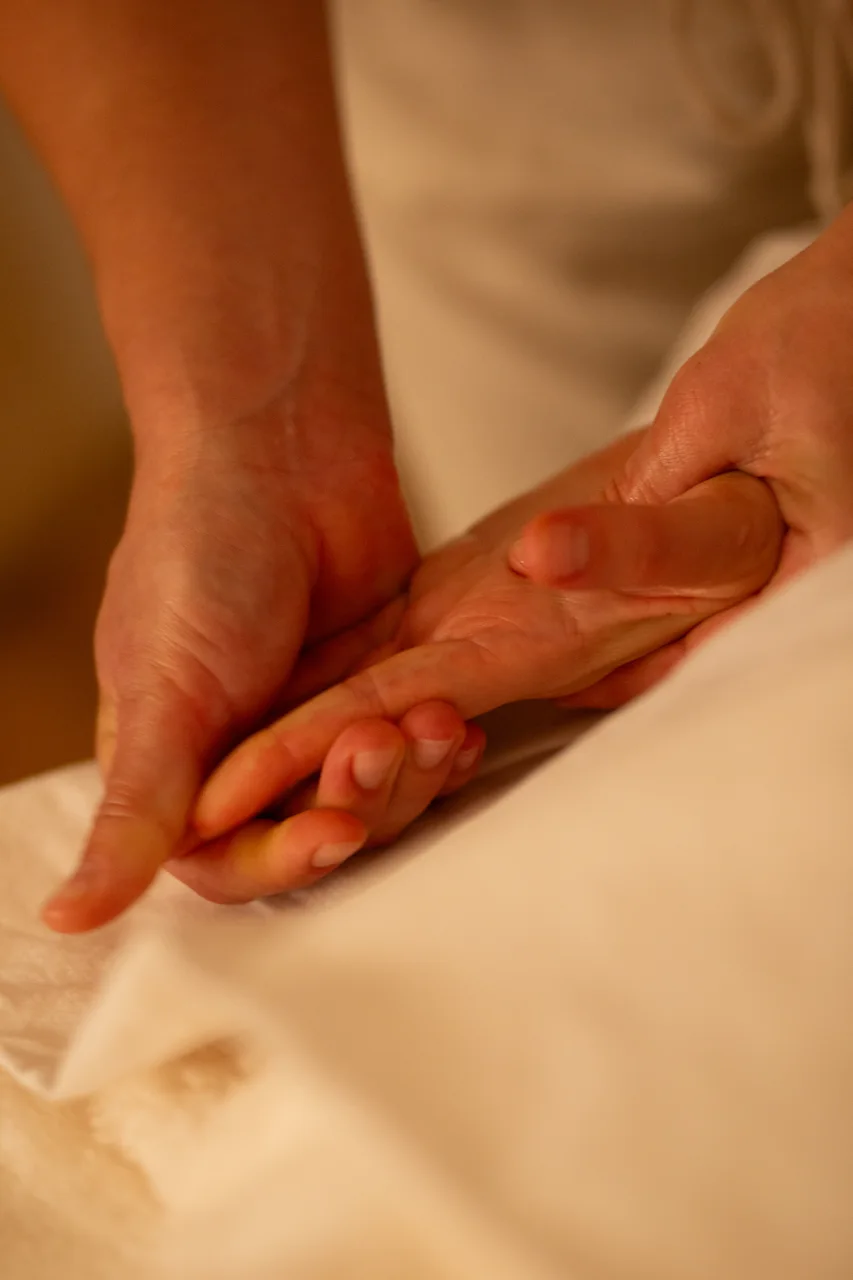
Touch and pressure: explaining what feels comfortable
Touch can be difficult to describe before you experience it. Your preferences may therefore become clearer during a session. Nata and Tanya both describe adapting pressure to the client’s response. This guide helps you express a preference or discomfort without needing anatomy or massage terminology. Stronger pressure is not automatically a better choice for you.
Words you can use during treatment
A short sentence is enough: “A little lighter here”, “That feels comfortable” or “This area feels more sensitive than I expected”. You do not need to analyse exactly what is happening. Describe the sensation so your practitioner can understand. Speaking up provides useful information; it is not criticism of the entire session.
Nata describes a scale from zero to five. If pressure feels like a four or five, she wants you to tell her so she can work more lightly. The scale supports communication; it is not a target to reach. Tanya describes checking pressure throughout and beginning gently. Ask how your chosen practitioner prefers to communicate with you.
If you already know an area is sensitive, mention it at the beginning. Ask how you will handle any need to change the session as it progresses. This gives you words to use before you feel overwhelmed. A quiet session and clear communication can go together.
How do you say the pressure is too strong?
A simple sentence is enough: a little lighter, please. Nata describes using a scale from zero to five and reducing pressure when it feels too strong. Tanya encourages clients to mention discomfort. You do not need technical vocabulary. Clear feedback helps your practitioner adapt touch rather than having to guess how it feels.
Deep massage does not have to mean pain
Tanya’s own description emphasises that deep work does not have to hurt. If you are bracing yourself to endure the pressure, that is useful information to share. Describe how it feels now, even if the same pressure felt fine elsewhere. Different areas may feel different within one session, so feedback is an ongoing conversation.
Sensitive to touch: how to mention it before booking
You can say that you are sensitive to touch without explaining your entire history. Mention whether it concerns a particular area or uncertainty about what will happen. Tanya describes a gradual start and Nata gentle pressure. Ask for a concrete outline and discuss what would need adapting before you decide to book.
Why can the same pressure feel different in different areas?
Your experience matters more than keeping identical pressure everywhere. Pressure that feels comfortable on your back may feel different elsewhere. Give brief feedback when your practitioner changes area. This is part of making the session personal, not a sign that you are being difficult or receiving treatment incorrectly.
How to use a pressure scale without overthinking it
Nata describes a zero-to-five scale as a simple way to discuss pressure. Your number does not need to be precise or comparable with anyone else’s. The purpose is to make your experience understandable. If you notice yourself enduring the touch, say so in ordinary words. You do not need to wait until you have chosen the perfect number.
Discussing areas you do not want treated
It helps to discuss preferences about areas before treatment begins. Tanya describes asking about boundaries and anything uncomfortable. If you are uncertain about Nata’s approach, ask her to explain before starting. You can state a preference briefly and clearly without giving a personal explanation for why it matters.
When you prefer less conversation on the table
You may welcome an opening conversation and then prefer quiet. Tanya describes less conversation during treatment as a way to make room for attention to the body, while still welcoming feedback about discomfort. Say that you prefer a quieter session. Silence should not make it harder to briefly mention pressure or position.
If you do not feel relaxed immediately
A session does not have to begin with immediate relaxation. You may still be thinking about your day or trying to understand what will happen. Mention it rather than trying to perform relaxation. Tanya describes a gradual beginning with touch over the sheet. Nata also begins by inviting attention to breathing.
Giving feedback without feeling difficult
Feedback is information, not a criticism of the practitioner. Words such as lighter, slower or that area feels sensitive make the session easier to adapt. You can also mention what feels comfortable. Speaking up early is more useful than waiting until payment to explain that the pressure was uncomfortable.
Body awareness without needing a particular experience
Body awareness can begin with something ordinary: noticing how you are lying, what feels comfortable or where you are bracing. You do not need a dramatic experience. Nata and Tanya describe different ways of paying attention to the body. Your own description matters more than comparing your experience with somebody else’s story.
Make the preference specific
Try distinguishing pressure, pace and the amount of conversation. “Lighter pressure” does not necessarily mean “faster treatment”, and wanting quiet does not mean giving up feedback. Explain which part you would like adjusted. If something remains unclear, ask for an explanation before proceeding with the arrangement.
Related guide
Say what you would like changed
“A little lighter there, please” is often clearer than trying to give the whole treatment an exact score. If an area feels different, explain where and how. A request for lighter pressure in one place does not need to apply to the entire session.
You can also ask for a gentle start when work moves to another area. This gives you and the practitioner a shared starting point for noticing and adjusting the touch.
Separate pressure, pace and focus
“Slower”, “more time on my shoulders” and “lighter pressure” are three different requests. Choose the words that best describe what you want changed. You do not need a technical explanation.
Nata and Tanya both describe adapting touch to the client. Explain when something feels comfortable too. This helps your practitioner understand what works, as well as what needs adjusting.