Nata & Tanya
Body therapy
Conversation, bodywork and breathing guidance, shaped around you. Explore Nata’s and Tanya’s individual approaches.
Guide · Kroppsterapi Malmö
A practitioner’s approach, communication and practical arrangements matter as much as the name of a session. Get to know Nata and Tanya’s personal approaches.
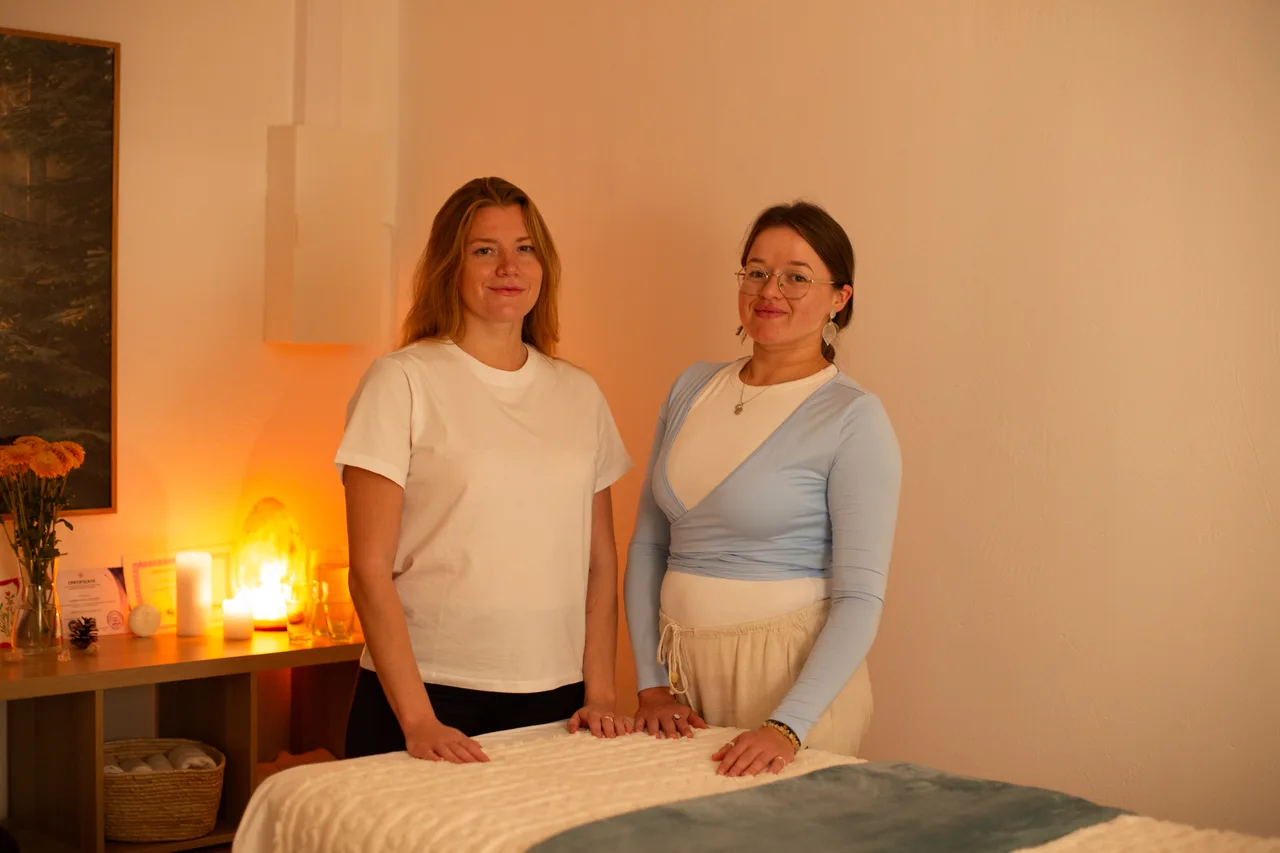
Nata & Tanya
Conversation, bodywork and breathing guidance, shaped around you. Explore Nata’s and Tanya’s individual approaches.
Tanya
Tanya combines focused muscle work with relaxation and body awareness. Pressure and areas of focus are adapted to you.
Write down what would make an appointment feel understandable and comfortable. You might want a particular language, more explanation, quiet or time to discuss pressure. These preferences give you a way to read profiles without relying on a long list of techniques.
A warm photograph or an appealing phrase can help you form an impression, but it cannot answer every practical question. Use the profile as a starting point and ask directly about anything important that is not stated.
Training should be described in specific terms: the course, provider and what the practitioner says she uses in her work. A completed course is not automatically a medical qualification, and an interest in a client group is not the same as substantial experience working with it.
Tanya completed the 45-day “More Than a Massage” course developed by Anatolii Hrynenko. Nata trained in body therapy at Peter Goldek’s clinic and also completed a theoretical Ukrainian course in body psychotherapy. Their profiles describe their backgrounds and personal approaches; these are individual, not interchangeable qualifications.
Nata’s current listed body therapy session is 75 minutes at 750 SEK. The booking system remains the place to confirm current details. Tanya offers 75-minute sessions. Contact her directly to agree on the treatment, price and booking terms.
Do not compare an available offer with an imagined one. If details are missing, write down the question and wait for the answer. That is more reliable than assuming the same price, schedule or format applies to both people because they share an address.
Nata offers sessions in English and Ukrainian. Tanya speaks Ukrainian, Polish and English. The ability to ask for a change or describe a boundary is an important practical part of choosing a session.
You can also ask how the practitioner explains the session and checks in during it. If you prefer quiet, say so. If you would like each step described, ask about that instead. The aim is to understand the working relationship before making a booking.
Check the full appointment length, payment method, cancellation deadline and any fee for changing a booking. Where a package is offered, read the conditions for that package rather than applying the terms for a single visit.
The practitioners work independently at YogaWay Studio. A shared location does not mean that bookings, payment or terms are shared. Make sure the confirmation identifies the person you intend to meet and the exact session you selected.
It is reasonable to choose one appointment after receiving clear answers and decide later whether you want another. A longer arrangement should be a decision you understand, not a way to resolve uncertainty about the first session.
If you are still unsure, send a short question: “I am looking for this kind of visit, and these practical points matter to me. Does that fit your approach?” The answer may help you choose Nata, wait for Tanya’s booking details or look for a different service.
Comparing services is easier when you look at the same details for each one: what happens during the appointment, who provides it, how long it lasts, how you book and what you will pay. A beautiful photograph or an appealing treatment name can introduce the service, but neither gives you all the practical information needed to decide.
Start with one or two things that matter to you. You might want focused muscle work, more room for conversation or a practitioner whose treatment language you understand comfortably. These preferences help narrow your choice without requiring you to identify the correct method for yourself in advance.
At this clinic, Nata offers body therapy. Tanya offers body therapy and deep massage. The two treatments are presented separately so that you can understand what you are asking to book. They share a personal approach, but that does not make every session identical.
A service description explains the offer; the practitioner’s profile adds information about how that person works. Read both if you are unsure. Pay attention to their account of a first visit, how they describe touch and the role of conversation. Look for information that helps you picture the appointment rather than expecting a biography to predict how you will feel.
Nata describes combining bodywork with breathing guidance and conversation shaped around the client. Tanya describes beginning gradually, building trust and adapting touch to the person. These accounts offer a starting point for your choice. They should not be read as promises of an identical experience or a guaranteed result.
Check language alongside the treatment itself. Nata works in English and Ukrainian. Tanya speaks English, Ukrainian, Polish. Choose a language in which you can comfortably ask questions and explain preferences. If that remains uncertain, ask before you make a booking.
You do not need a lengthy interview to decide whether to book. A short, relevant question can show whether the offer is clear. For example: “I am mainly interested in massage and would prefer less talking. Is this the right appointment to choose?” Or: “I would like to understand how conversation and bodywork fit together during body therapy.”
A useful answer explains the service in terms you understand. It may also identify a limit or suggest that another kind of support would be more appropriate. Clear limits are part of an accurate description; they are not necessarily a reason to dismiss a practitioner.
Do not judge the fit only by how reassuring the wording sounds. Check whether your actual question has been answered. If you still do not know the treatment, time, cost or booking route, ask for that missing detail before confirming.
A 75-minute session includes conversation and time to finish, not necessarily 75 minutes of hands-on work. The balance depends on the practitioner, treatment and your needs. When comparing two offers, make sure you are comparing the total appointment rather than assuming that the advertised duration describes only massage.
Consider the practical commitments too. Check how payment is made, how you would change the appointment and which cancellation terms apply. A lower headline price does not explain those details. If you need a receipt for a workplace allowance, clarify that process separately rather than treating it as included by default.
Nata’s current options are shown through the booking page and her external calendar. Tanya arranges appointments directly. A message to Tanya is an enquiry until you have agreed the appointment details. Keep the response that confirms what has been arranged.
Imagine that you have spent several weeks sitting at a desk and would like some time focused on muscular tension. Tanya’s deep massage description may be the clearest place to start reading. It explains focused muscle work, relaxation and body awareness. You can ask about the areas you would like attention to without assuming a particular result.
Alternatively, you may be curious about a session that includes more conversation alongside touch and breathing guidance. The body therapy page and Nata’s and Tanya’s profiles help you compare their approaches. Your reason for choosing does not have to be a diagnosis or a detailed personal story.
These are examples of how to navigate the website, not recommendations about which treatment is medically appropriate for a symptom. Persistent or acute pain and other health concerns may need assessment outside the clinic’s scope. The service should fit your situation, including any need for another kind of care.
Choosing a first appointment is not the same as choosing a permanent treatment plan. You can begin with one visit, notice whether the approach suits you and decide later whether to return. You do not need to know in advance how many appointments you will want.
Afterwards, consider whether the session matched the description and whether communication felt clear. Those observations can help you make the next decision. An ongoing relationship with a practitioner can develop over time; it does not need to be promised before you have met.
Explore your first visit or choose a practitioner. Nata offers body therapy; Tanya offers body therapy and deep massage. Your session is tailored to you.