Massage after the working day in Malmö
After a day at a screen, you may want attention to your shoulders, a break from another task, or simply a quiet moment.
Guide · Kroppsterapi Malmö
When days are full, it can be useful to notice what kind of pause you are actually looking for. This guide offers reflection rather than a treatment programme.
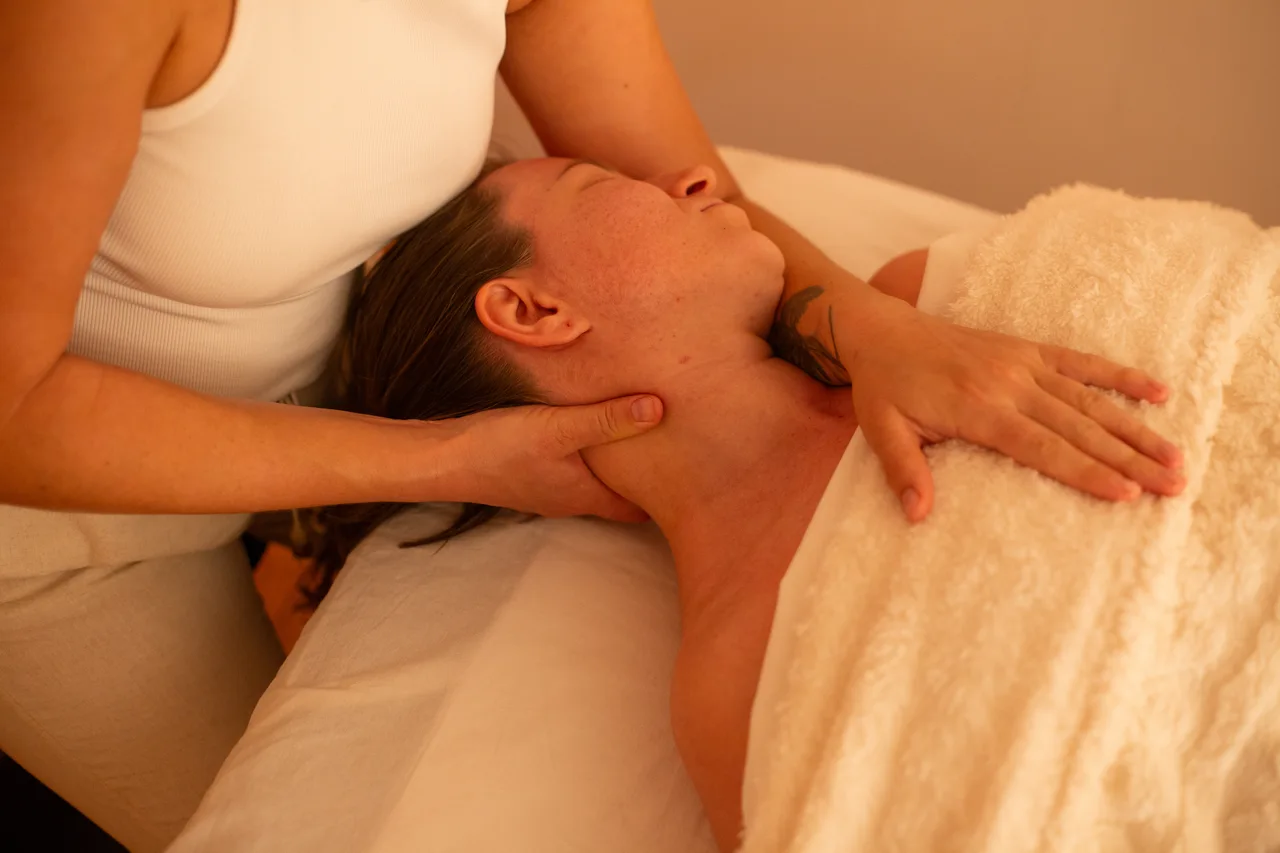
Working days differ. One person sits for long periods, another stands or lifts, and someone else struggles to slow down after a busy day. Describing your day is more useful than trying to fit a particular client type. These examples show how everyday life can inform the conversation before massage or body therapy, allowing for both specific areas of focus and a wish for quiet.
Instead of saying “my whole body is wrong”, begin with something you notice: “I spend much of the day at a computer and notice my shoulders most in the evening.” This offers a clear starting point without establishing a cause. You and your practitioner can then discuss the session’s focus.
Another example is work involving long periods of standing. Your legs and feet may matter more to you than your back and neck. Mention this before treatment, rather than leaving the allocation of time to an assumption. If your main wish is simply a quiet moment, you can say that just as directly. You do not have to identify a bigger problem to want care for your body.
A session does not change your work schedule or remove everything that makes daily life demanding. Treat it as a defined visit with a clear focus. This also makes it easier to decide afterwards whether that kind of session suits you.
After a busy week, it can be difficult to name one problem. You can say that you want a break from the pace of work and a session based on how your body feels. Mention if your shoulders or back have most of your attention. Your expectation can simply be to make space for one clearly defined visit.
Tanya describes her massage as an option that may appeal to people who sit frequently and notice tension. Explain your working day and the area you want to focus on. A session can be adapted, but it does not automatically change your workstation or working habits. Treat the visit as one part of paying attention to your body, with realistic expectations.
Work involving standing, lifting or repeated movements may make certain areas more noticeable in daily life. Describe the tasks in simple terms so Tanya can discuss the focus of your massage. If you suspect an injury or have persistent pain, seek healthcare assessment rather than treating it only as ordinary workload.
You can explain what you need without recounting everything that happened. For example: I would like a quiet session with a focus on my back. That gives the practitioner a useful starting point. You can still cover relevant questions and agree on the structure. Choosing less conversation does not have to mean less personal attention.
A treatment appointment can become another item to squeeze in. Consider the whole visit: travel, arrival, the session and afterwards. Choose a time with practical margins. Rest does not need to become another performance task. A simpler approach may be to book one visit and evaluate it afterwards.
You do not have to organise every thought before arriving. Explain that changing pace feels difficult and ask how the session can begin gently. This can help you agree on the amount of conversation and explanation. Body therapy is not a promise that thoughts will disappear; it is a visit whose structure can be adapted to you.
Tanya includes arms among the areas that may be part of her massage. If you use them frequently at work, describe both your tasks and what you notice. She can discuss giving them more attention. Numbness, new weakness or a clear change in function should not simply be attributed to tension and warrant healthcare assessment.
Legs and feet can be included in Tanya’s massage. If you spend much of your day standing, mention it when discussing the focus. Ask how time will be divided if you also want work on your back. Clear priorities are more useful than expecting equal attention to every area in a single visit.
A change in everyday life may make you want a different kind of time for yourself. You do not need a complete story about the change. Describe what you notice and the type of session you would prefer. If you primarily need counselling or healthcare, choosing the appropriate professional matters even if bodywork also interests you.
Mention tiredness at the start and explain what you want from the visit. An intense session is not automatically better than a gentle one. Ask about pace and pressure so expectations are clear. New, pronounced or persistent tiredness should not simply be treated as a need for massage; contact healthcare if it needs investigation.
Consider what matters this time: one area, a quieter pace or understanding the treatment better. You do not have to choose the same focus next time. New, persistent or concerning symptoms need healthcare assessment; do not use a massage appointment instead of seeking help for a problem that needs investigation.
After a day at a screen, you may want attention to your shoulders, a break from another task, or simply a quiet moment.